At a glance
- Client: Edeka Südwest
- Sector: Retail
- Project objective: To forecast demand for baked goods at each site
- Technology: SQL Server, R
Self-service baking stations are now a familiar sight in the food retail sector. Yet well-stocked shelves with fresh produce right up until closing time are essential for a positive shopping experience. As a result, retailers face a daily balancing act: they must ensure stock availability without overstocking.
“If the retailers in our group bake too little, they disappoint their customers – and miss out on sales potential,” explains Marcel Bühler, consultant for project management, innovation management and organisational development at Edeka Südwest. “If, on the other hand, they bake too much, write-offs increase and gross profit falls.”
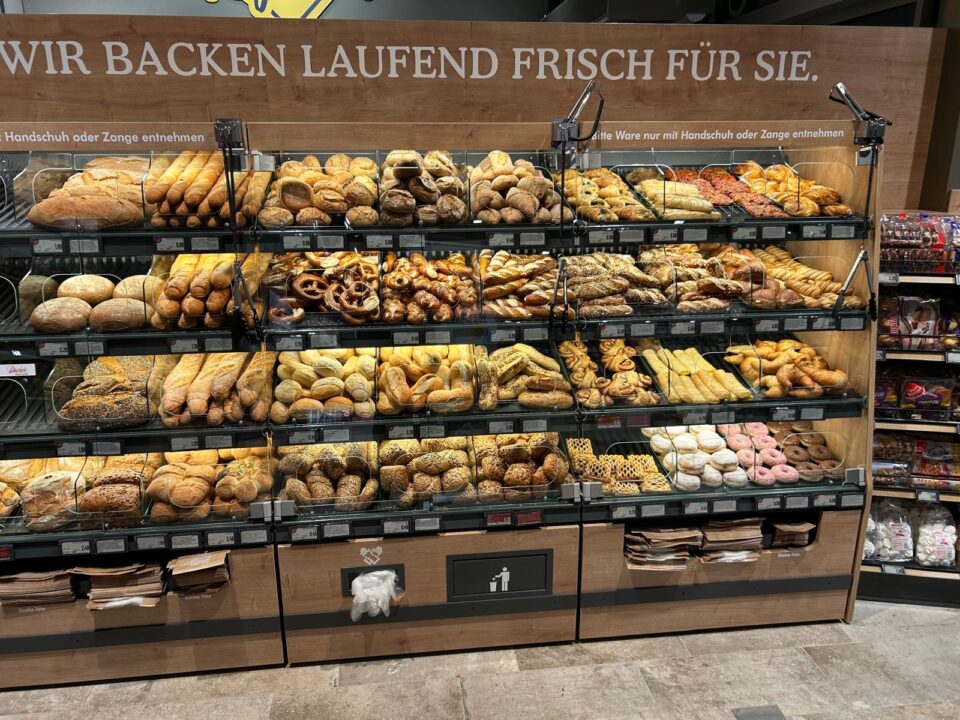
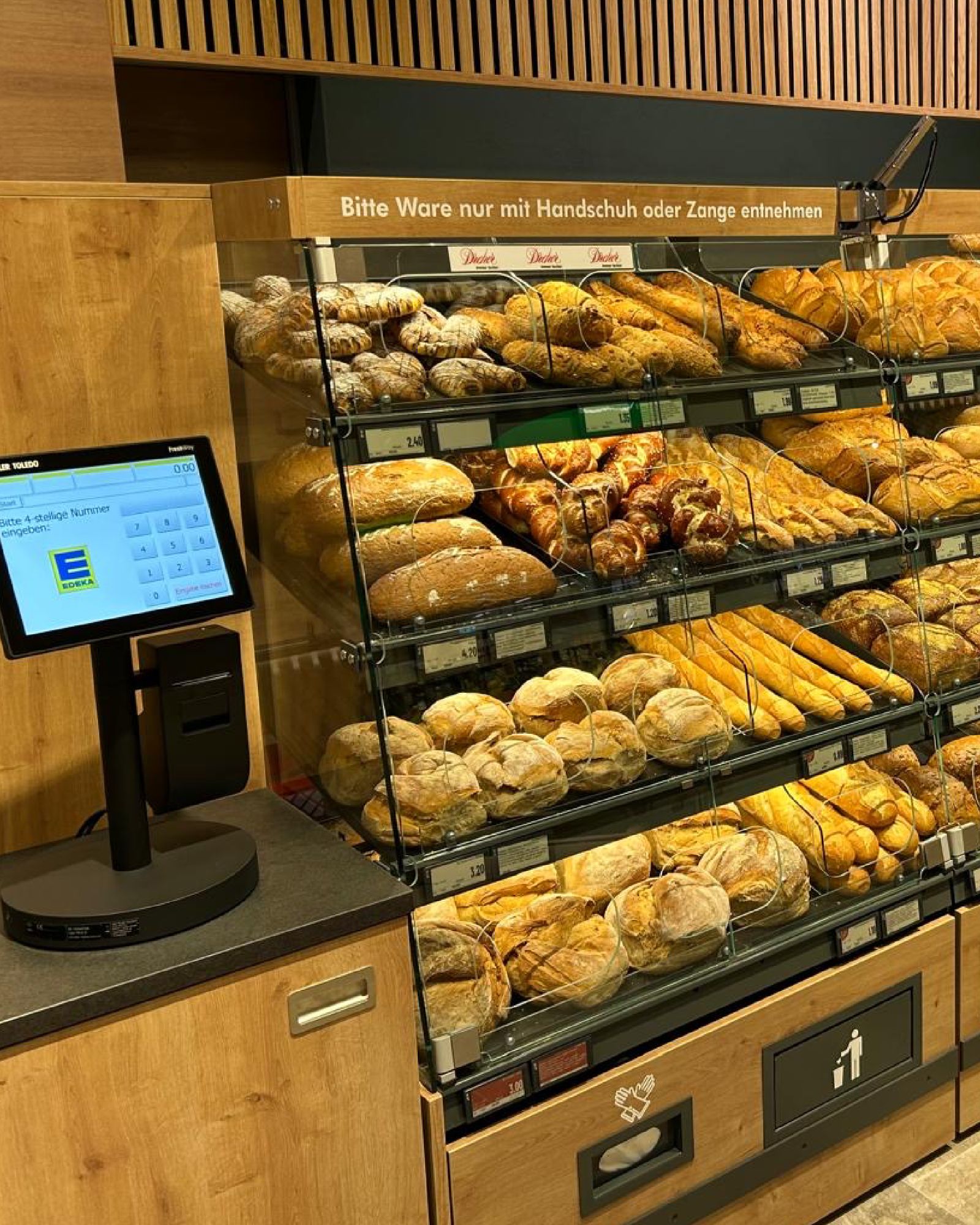
Customers expect a comprehensive selection of fresh goods at self-service bakery stations throughout the day. (Edeka Südwest)
This presented the ‘Central Services’ department with an opportunity to use artificial intelligence to ease the workload on the approximately 1,100 Edeka stores in south-west Germany and support them in making improvements. The plan was to introduce a regular baking recommendation that would forecast, individually for each store, when which items should be baked and in what quantities.
Forecasting demand for baked goods is complex
The use of demand forecasting is nothing new for Edeka Südwest. In the so-called ‘dry goods’ sector – that is, non-perishable foodstuffs and drugstore items – automated ordering processes based on AI-supported forecasts have long been established. However, the business surrounding self-service bakery products is significantly more complex – and so too is the development of an accurate bake-off recommendation system.
“We’re dealing with ultra-fresh products here,” says Marcel Bühler. “In our specific case, on the one hand, we need to provide store managers with the most accurate possible quantities for their orders across the entire product range. On the other hand, reliable information is needed on the baking time for the delivered unbaked items, so that even less experienced staff can make the right decisions throughout the day. Particularly against the backdrop of the skills shortage, this is a key factor for success.”
A further challenge is posed by various influencing factors that cause the figures to fluctuate constantly. “Virtually every week is different. This becomes particularly evident during special promotions. In individual stores, sales can rise by up to 200% as a result. Holiday periods and public holidays are also factors that must be taken into account when providing individual baking recommendations,” explains Marcel Bühler.
Bake-off template reduces development effort
The specific bake-off solution was developed in collaboration with ORAYLIS. Their data and AI experts have extensive experience in demand forecasting for the retail sector. In the case of the baking recommendations, the service provider already had an existing template at its disposal, which simply needed to be adapted to Edeka’s processes, databases and data sources. This significantly reduced the development effort.

Lukas Lötters, Principal Consultant Data Science at ORAYLIS. (ORAYLIS)
The solution is based on a more ‘traditional’ form of artificial intelligence. ‘At the moment, everyone is talking about AI agents and the possibilities of generative AI,’ explains Lukas Lötters, Principal Consultant Data Science at ORAYLIS. “However, for forecasting sales volumes, classic machine learning is still the most suitable approach.” To cope with the complexity of the use case, the underlying machine learning model was trained using a broad spectrum of historical data. “In addition to sales figures for individual products, our forecasts take into account markdowns, product and branch information, special promotions, as well as public holidays and school holidays,” says Lukas Lötters.
Using this data, the model first calculates, for each site, how much of certain items will be sold during specific time periods. In a further processing step, it then takes into account when it makes sense to bake which quantities. Operational aspects, such as full baking trays and practical workflows in-store, also play a role here. Rather than an abstract analysis, this results in concrete guidance for day-to-day operations.
Results are continuously optimised
The entire analysis process is fully automated. As a result, a PDF containing the baking recommendations for the following week is automatically sent once a week to the relevant managers in the participating shops. Around 200 branches are already using the service – and the trend is still rising. The feedback has been very positive. “Our baking recommendations have proven their worth in practice. The figures show a noticeable improvement,” says Marcel Bühler. “Of course, we also receive suggestions for adjustments. These are incorporated directly into our model, so that our forecasts become increasingly accurate.”
Marcel Bühler is equally pleased with how the project has progressed. “Working with ORAYLIS has been a very positive experience. We enjoyed complete transparency at all times. Questions and issues were resolved quickly and efficiently. Whenever adjustments were needed or strategic decisions had to be made, we worked together to find a solution straight away. Our partner didn’t just implement the changes; they also provided active advice – always with the aim of achieving the best possible result for us.”
Analyses are currently being carried out to compare the baking recommendations with actual sales figures. This shows, on the one hand, the extent to which the recommendations have been taken into account in day-to-day operations and, on the other hand, where there is potential for improvement. For shop operators, this means a whole new level of transparency for managing their operations.
Turn your data into value.